Caring for the Commons: DIY Craft Against Plastic

Exploring Crafts for a Better Life
As an environmental philosopher, I am constantly grappling with questions about what it means to live a virtuous life —something that, for me, is inseparable from being a good earthling. I am equally drawn to the practical question: how do we convince others that nature matters, and that we must do better? This project has been an attempt to wrestle with both.
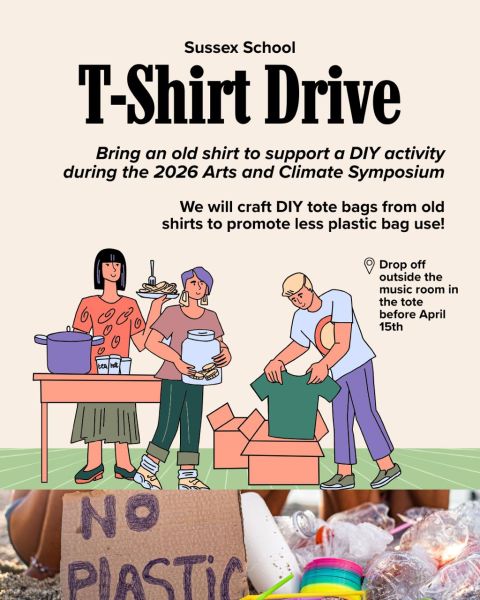
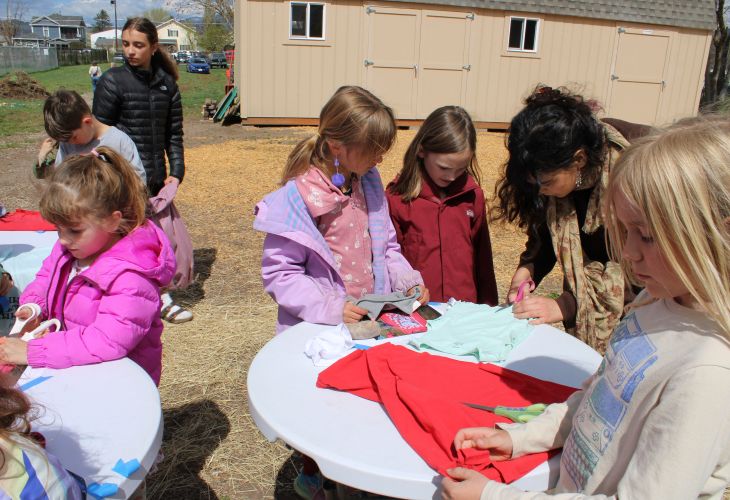
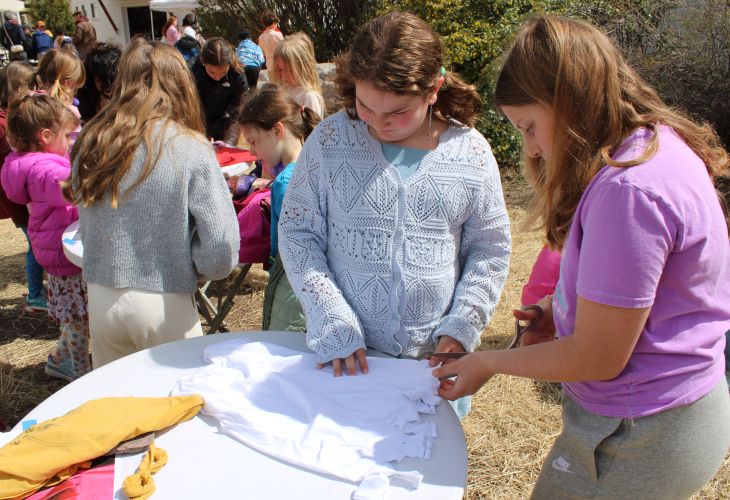
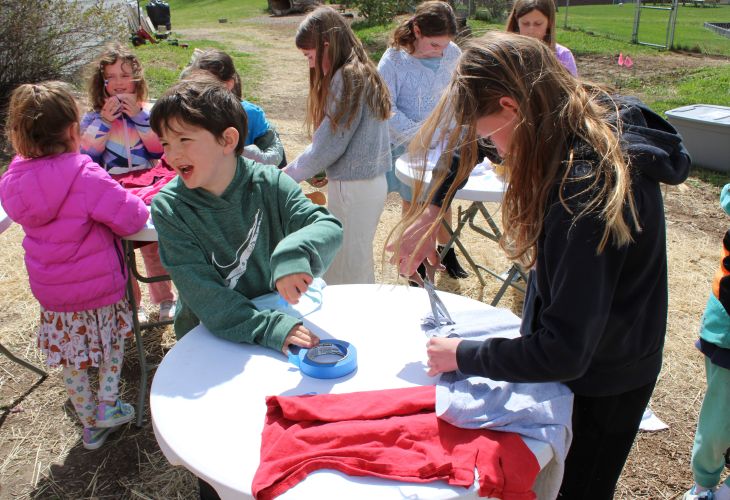
Motivated by the question of what meaningful action looks like in the face of large-scale ecological crisis, I organized two community craft workshops in Missoula where participants transformed old t-shirts into reusable tote bags while also discussing about why this sort of things matter. I believe that small, place-based practices can be a form of genuine ecological commitment, even when their consequences are uncertain—especially when we can engage a community of people, however small!
I invite you to scroll down to see some pictures and read more information about the workshops!
And, if you'd like to learn about the depths of the project, I invite you to click on the following link and consult the full written portfolio:
Land Acknowledgment
The 吃瓜网 acknowledges that we are in the aboriginal territories of theSéliš and Ql̓ispé people. Today, we honor the path they have always shown us in caring for this place for the generations to come.
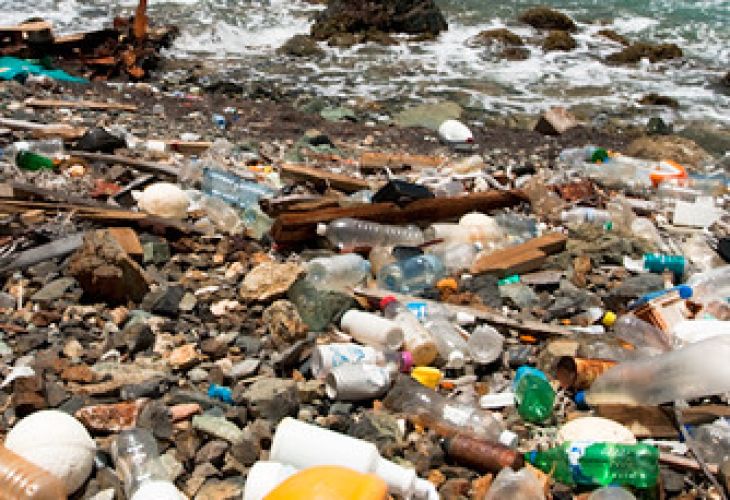
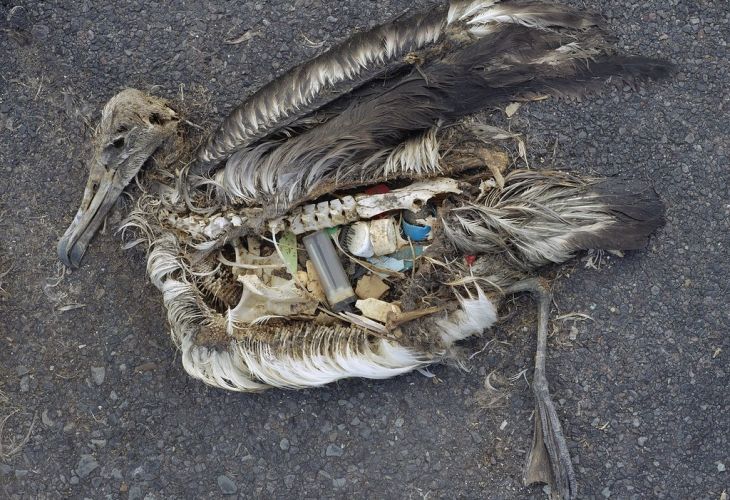
Plastic waste is one of the most tangible environmental crises of our time. Coastlines across the world are littered with plastic debris, and marine wildlife constantly ingest or become entangled in it. And yet the solutions are less straightforward than they appear: as environmental scientist Hannah Ritchie points out in her 2024 book Not the End of the World, the carbon footprint of a single-use plastic bag is actually lower than that of paper or cotton alternatives, and recycling is very limited: we can only recycle plastics one or two times. What this tells us is that the problem is not solved by simply swapping one material for another—it requires us to consume less and reuse more. This thought has informed my project: in the workshops, rather than acquiring something new, participants brought an old t-shirt they no longer wanted and left with a bag they can use again and again. It is all about of simplicity, reuse, and a little creativity as a response to an overwhelming problem!
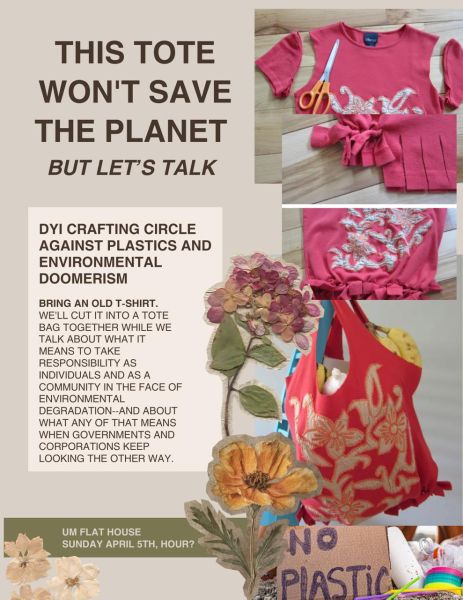
Workshop #1
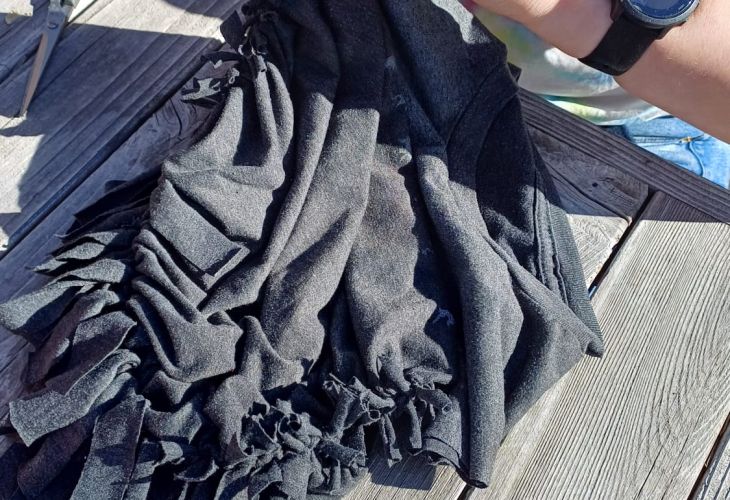
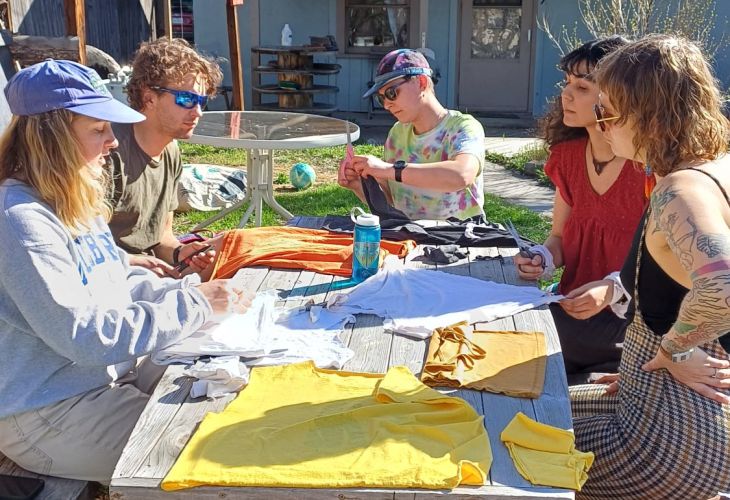
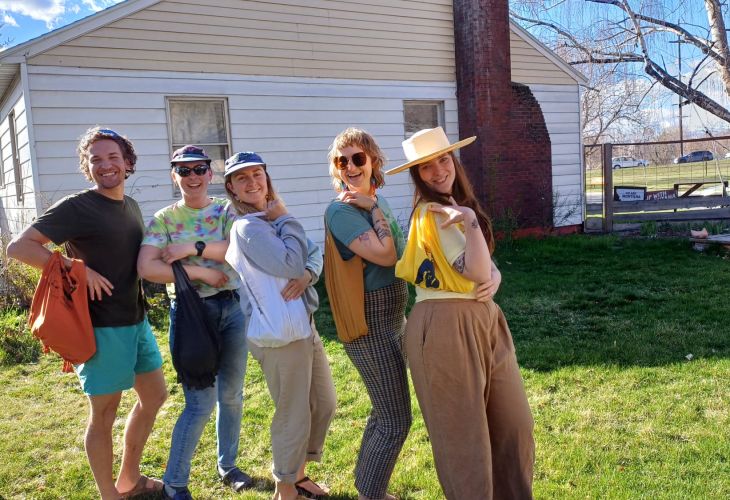
Workshop #2
Theoretical Applications
-
The most germane theoretical inspiration for this project is drawn from the course PHL 515— “Issues in the Anthropocene,” and, more specifically, from Steven Vogel's Thinking Like a Mall (2015). In this book, he argues that environmental philosophy should focus not on an abstract, pristine "nature" out there, but on the built world we have collectively created through our everyday practices. Vogel's diagnosis is that the capitalist market alienates us from our environment and atomizes us as individuals, making collective action feel impossible. His call for dialogue and democratic community-building inspired the workshops: as an act of getting together to make something, the workshops were conceived as an opportunity to bring people closer to discuss an urgent environmental issue and decide together the kind of world we want to create. This is a small step toward the kind of collective, practice-based world-building Vogel envisions.
-
This project is grounded in different frameworks from the seminar PHL 522 - Environmental Philosophy. Cronon's critique of "wilderness" warns against displacing environmental value onto distant, pristine landscapes and away from the spaces where we actually live, underlying the importance of protecting what is closer to us. Ecofeminism, as developed by Gaard and Gruen, reveals how the domination of nature is entangled with social inequalities such as the obscene gap in consumption between the global North and global South. This signals the importance of being critical with the overproduction and overconsumption that take place in the global North, and consequently of embracing a simpler lifestyle where we prioritize not only recycling but also reusing. Environmental virtue ethics, finally, reframes ecological responsibility not as sacrifice but as an opportunity for joy, care, and human flourishing. The workshops were conceived as a chance for joyful human flourishing through the practice of zero-waste values.
-
The project was also inspired by the seminar PHL XXX-Topics in Value Theory. In this class, we read Anthony Laden's Reasoning: A Social Picture (2012), a book in which he argues that reasoning is not something individuals do alone but an activity that only emerges in relationship with others. Central to his account is his notion of ideals as "realistic utopias", which are ideals (1) whose normative force comes not from obligation but from invitation and (2) that are attractive and immediately actionable. The workshops tried to enact this philosophical insight: instead of than arguing people into ecological responsibility through the force of reason, the goal was to extend an invitation they might genuinely want to accept by crafting something together. And, most importantly, they tried to demonstrate that a different relationship to consumption is a realistic utopia, because possible right now, with what we already have (such as old shirts we no longer want to wear). The only thing needed is imagination and joy.
Acknowledgments
I remain forever grateful to the Philosophy Department at the 吃瓜网. In particular, I wish to thank Dr. Soazig Le Bihan for her unwavering support, her many letters of recommendation and the cheerfulness with which she colored our days of study; and I want to thank my advisor on this project, Dr. Matt Strohl, for his guidance and lenience.
I also want to thank my cohort, Shane Randle, Mack McNerney and Casey Auberle. Sharing conversations, the classroom and so may other spaces with the three of you over the past two years has been truly great. Thank you, Shane, for always being there for me. And I want to acknowledge first-year Environmental Philosophy MA student Quinn Allchin, for being a great hiking pal and a wonderful human to talk philosophy with.
Finally, to my family on the other side of the Atlantic, thank you for supporting my decision to move so far from home.